Every post comes from something I've done on a real project. AI tools, development approaches, how I actually build things. You're getting a curation of my taste, not takes on stuff I don't use. Subscribers also get extras: things that went wrong, how my thinking about AI is changing, hacky workflows I use every day, and the occasional personal update. Stuff I share with subscribers because it's a little too personal or unpolished to blast across the internet.
document evals - formative vs summative
|
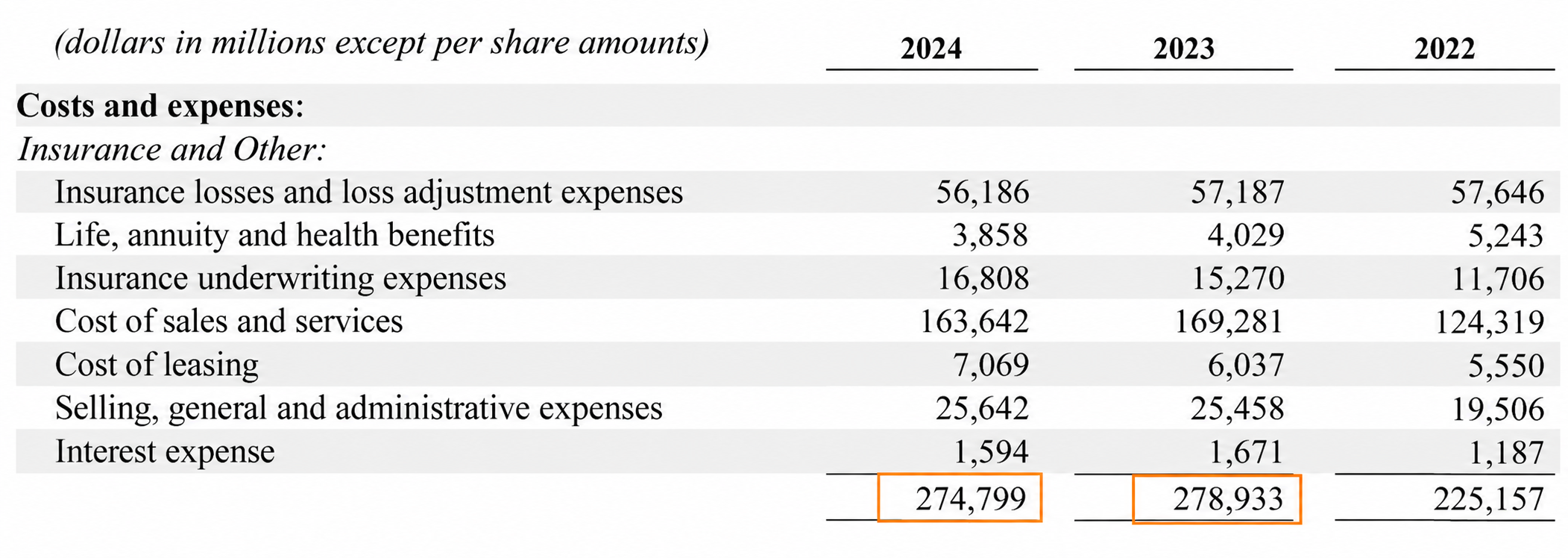
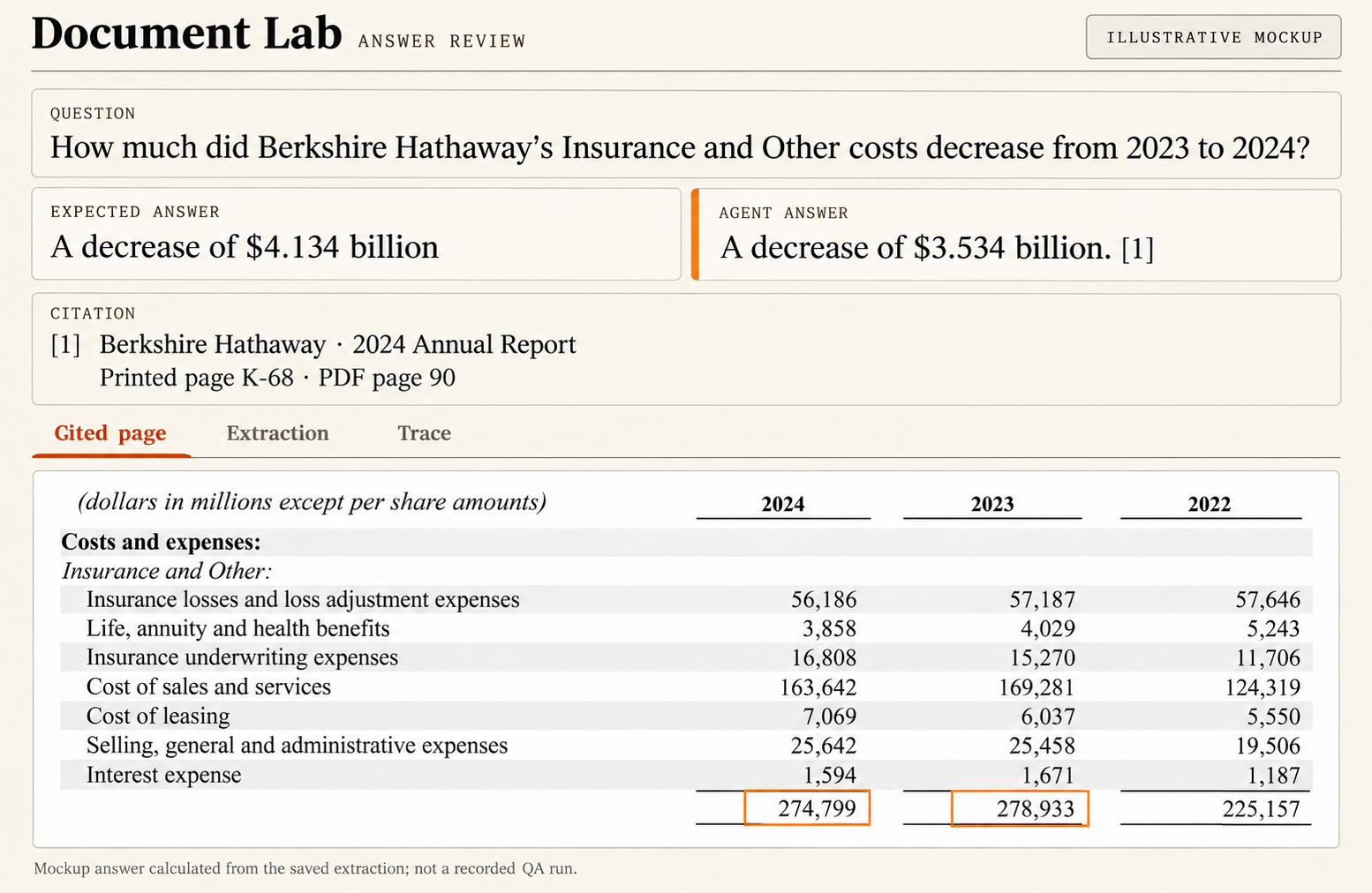
The most common questions I get (other than "what model do I pick?") is how do I evaluate OCR? How do you know how good a model is doing on your data? When I look at my data, what do I do when I see something I don't like? Today's post is on how to do that, and how to turn (semi-painful) adhoc inspection into repeatable tests at multiple levels. Also - As a reminder, early bird pricing for the PDF to Production course ends today. Formative vs. Summative Evals for Document AITo generate instructions for assembling furniture, the best eval would be to have someone assemble the furniture from the generated instructions. That's a summative eval, doing that after every tweak and experiment would be very impractical. So you want to ensure when you do those tests it’s worthwhile. To do that you make small tests to catch anything you can first. For example, you might check that every item on the parts list is somewhere in the generated instructions. This is a formative evals. Formative evals are much faster and cheaper, so you reserve slow expensive summative evals for things you can’t test any other way. That formative eval does not guarentee that the final instructions are good, but it is a requirement of good instructions. Anytime you change anything you can run this test quickly. Most systems need both of these types of evals, and both start with doing error analysis to understand the issue. In this post I will walk through 3 examples and the kinds of evals I build with them. For an example specific to medical record review, check out Joe Barrows post. Financial: tracing a wrong answer back to the subtotalI want an agent to answer, "How much did Berkshire Hathaway's Insurance and Other costs decrease from 2023 to 2024?" My agent said it’s a decrease of about $3.5 billion. That’s wrong by almost 600 million dollars according to the report.
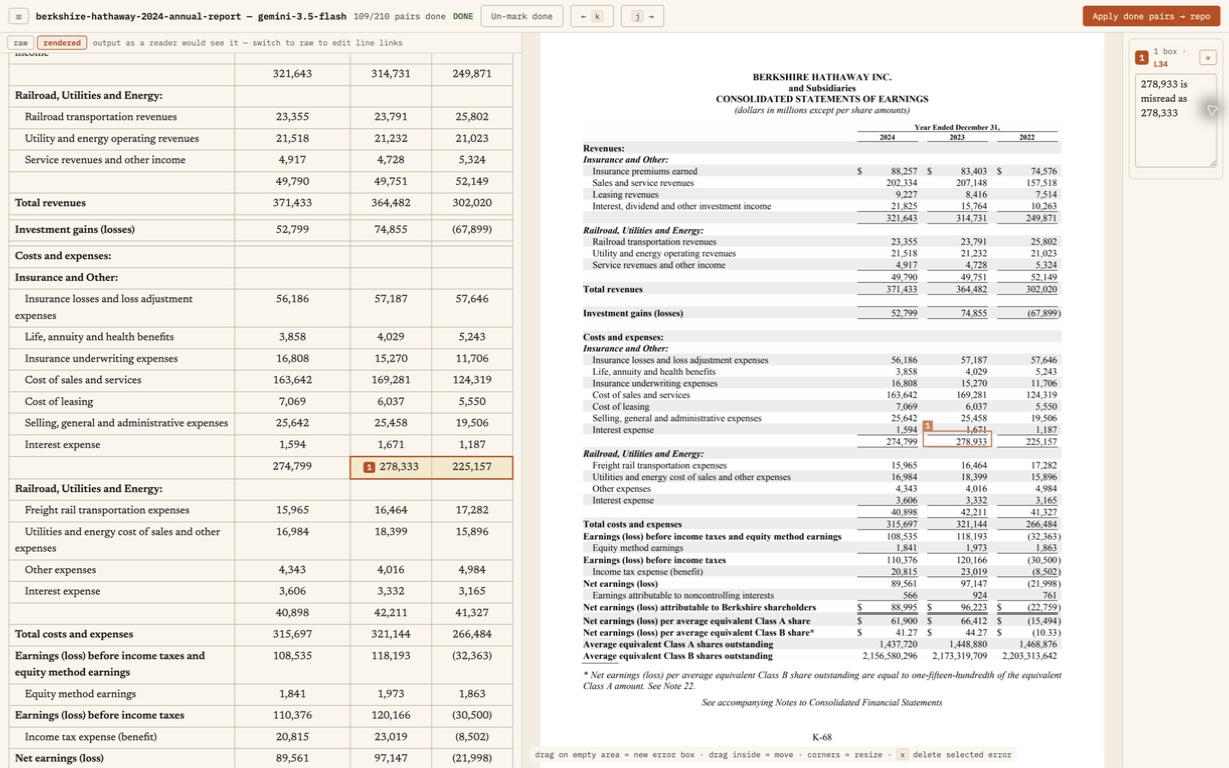
To do this I start from the end and work backward. Each answer leads to the next question until I figure it out! Is the wrong answer a model hallucination, or is it repeating something in it’s context window? It’s repeating something in it’s context window. How did it get into the context window? From a prompt, or from a retrieval tool call? From a retrieval tool call Is this wrong because the retrieval tool call returned the wrong page, or because the data it retrieved over was wrong? The data it retrieved over was wrong, but it got the right page. Why is it wrong? Is the source wrong, or was there some extraction error? There was an extraction error. The source PDF does not match the extracted value. Now, I know exactly where the issue is! The OCR model had an error when it converted the PDF to text. This tells me my formative eval needs to target the OCR process. Improving retrieval wouldn’t help because the failure was more upstream than that. It’s also important to have an annotation interface that lets you drill down into these steps. This is what it looks like when I am looking at the OCR step.
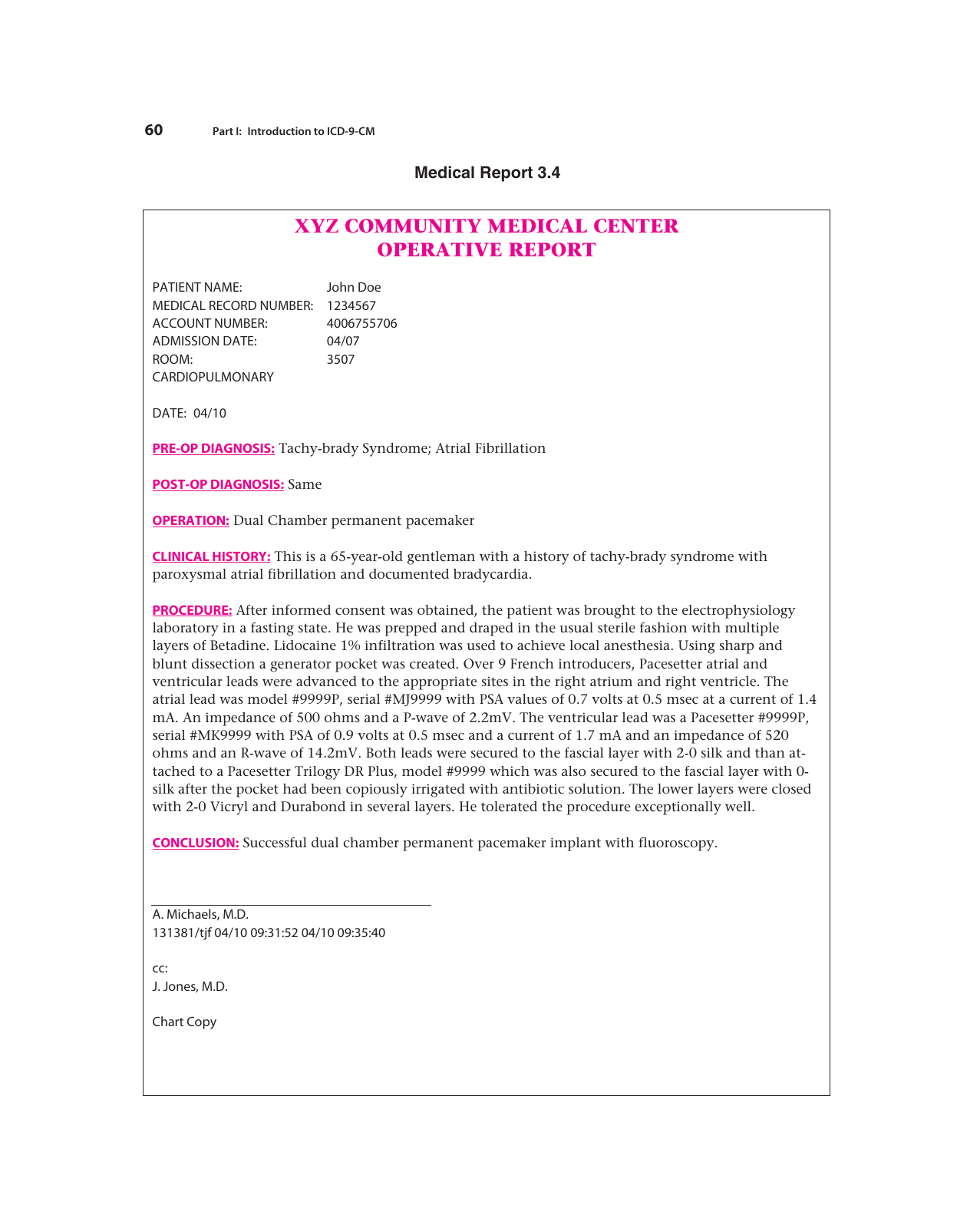
Now I can try changes to extraction and rerun that smaller test. Once it passes, I ask the full agent the original question again to check whether it gives the right answer or shows the next error. Medical: finding the missing event in a timelineIn a medical example, I ask "When was the pacemaker implanted?" The agent answers April 8. That’s wrong. The PDF operative report clearly says April 10.
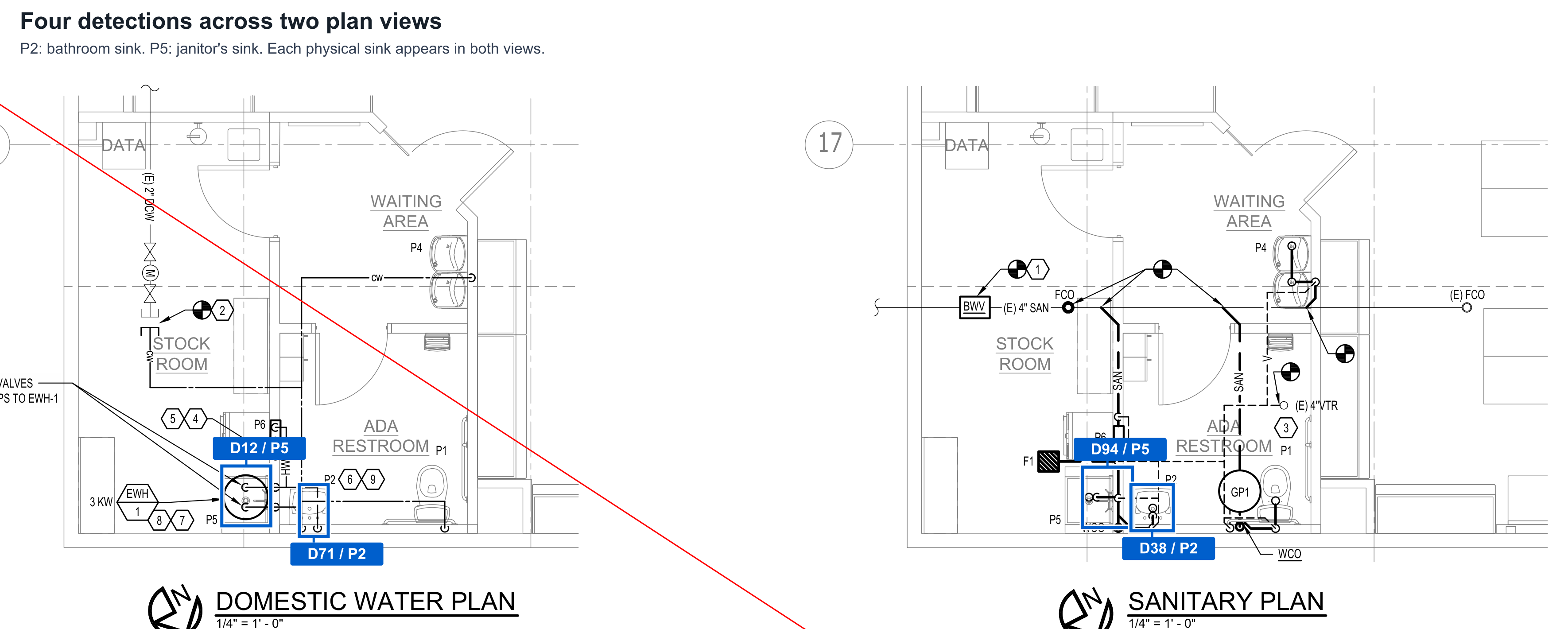
Source: LWW sample medical chart, printed pages 60–61. First, I want a summative eval on this. Does the agent's answer contains April 10? Now I work backward to find out where the April 8 date came from. Was the incorrect date (Apr 8) in the agent's context window? Yes. It had a progress note dated April 8 about plans for a pacemaker, so we can rule out a pure hallucination. How about the correct April 10? No. The April 10 operative report was not in the agents context window, so it had no chance of getting it right. How did records get into context window? The agent searched for “pacemaker surgery" Why didn't it return the operative report? The data was extracted from the PDF correctly through OCR, but the operative report ranked fourth. Since top_k was 3, it returned 2 progress notes and a consultation but not the operative report that it needed. That gives me a formative eval for retrieval. I save the search query and label the operative report as the correct answer. I can iterate and test this failure mode much quicker and cheaper because I don’t need to run the agent loop to test it. Floor plans: counting the same sink twiceNow, for a more complicated example. "Make a sink order from these plans, with model numbers and quantities." Consider an illustrative failure where the agent lists two Kohler K-2035-8 bathroom sinks and two Fiat L-1 janitor's sinks. That's wrong. There is only one of each. Following this order would buy two extra sinks. My summative eval checks that the order contains those model numbers with a quantity of 1 each. Now I work backward to find out why it doubled the quantities. Where did the quantities come from? A tool returned four fixture IDs; two bathroom sinks and two janitor's sinks and the agent used those to build the order. The LLM agent did what it should have based on the information it was given. What did the tool count? I look at the detected sink locations. There is a box around each sink in the water plan and another around each sink in the drainage plan. These are different views of the same plan though, so I think it’s double counting.
Source: Kirkland permit drawing, sheet M2, PDF page 18. So did detection get it wrong? No. There really are four sink symbols. The detection worked, but there should have been a dedupe step based on these being 2 views of the same rooms. How should the tool recognize the same sink across views? After detection, I pass both cropped plan views and the detected sink boxes to a matching model (VLM). It compares room layouts and fixture positions to identify which detections show the same physical sink, then assigns shared room and fixture IDs. If this step assigns different fixture IDs to the same sink in each view, the final order counts that sink twice. That gives me a formative eval. I save the views and detected boxes and cache that. I can then label which boxes show the same physical sink. I send that to my matching step and verify that the sinks end up in the same group! Turn the discovery into a repeatable testThe key is to start from a wrong final answer and turn that into an high level eval. But then dig deeper (error analysis) by working backwards until I find the root cause. That gives me a specific thing I can test without running the whole system. That lets me iterate much faster and cheaper without waiting for agents to run the full process. p.s. I am starting to livestream me doing these error analysis investigations live. Tuesdays and Thursdays on my youtube at noon eastern time. I'll get an actual schedule up soon. |
Isaac Flath
Every post comes from something I've done on a real project. AI tools, development approaches, how I actually build things. You're getting a curation of my taste, not takes on stuff I don't use. Subscribers also get extras: things that went wrong, how my thinking about AI is changing, hacky workflows I use every day, and the occasional personal update. Stuff I share with subscribers because it's a little too personal or unpolished to blast across the internet.
Hey, Registration for PDF to Production closes tomorrow, November 13. Joe Barrow and I teach this Saturday, November 14, from 10 a.m. to 6 p.m. Eastern. It’s $500, including recordings, notebooks, $1200 of vendor credits, and 30 days of follow-up support. See the curriculum and register: https://isaacflath.com/pdf2production If you'd rather stick to free resources and piece things together yourself, check out the Document Roadmap. It goes through an overview of key misconceptions and key...
Hey, There's been a ton of valid skepticism around benchmarks recently, but there's a lot of good reason for optimism too! Joe and I are going to discuss one of those in the document space, which is how unit tests are being used in benchmarks. And all of this is applicable to your own product's evals. After all, a benchmark is just another person's evals 😅. This Wednesday, Joe and I are discussing why unit tests make strong OCR benchmarks and how to design them. We’ll work through examples...
Hey, I wanted to understand how decision models (like Jev) actually work in detail. I use them a ton, and it's clear they're going to be a key part of software moving forward. Joe and I spent an hour going through all of that, using Perplexity Decider (OSS decision model) to go through the architecture. The talk walks through how this is built: Turning a decoder model into an encoder by changing its full-attention layers. Replacing the language-modeling head with a small head that produces...